Brokers and Spreads
A broker is the middleman standing between you and the market, and the spread, the gap between the price you buy at and the price you sell at, is the most common way that middleman gets paid for the access.
What a spread is
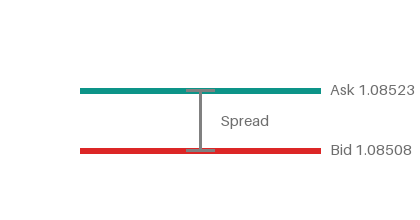
The ask (teal) sits above the bid (red). The gap between them is the spread.
Every instrument shows a bid price and an ask price side by side, and the ask always sits a little above the bid. That gap is the spread, and it means a position starts life slightly in the red, before price has moved at all, because you buy at the higher ask and would have to sell back at the lower bid. A tighter spread means less ground price has to make up before a trade is in profit.
Spread models
Some brokers charge a variable spread that widens and narrows with market conditions, stretching noticeably during news events or thin liquidity when the underlying market itself is less sure of a fair price. Others charge a fixed spread plus a separate commission per trade, which can work out cheaper for active traders even though it looks like an extra cost line at first glance. Neither model wins outright; the right one depends on how often you trade and what you’re trading.
What to look for
Regulation matters more than almost anything else, because it decides what protections exist if something goes wrong with the broker itself, not just with a trade. Beyond that, spread consistency during volatile periods, execution speed, and whether a broker allows the trading style you use, EA and algo trading in particular, are all worth checking before real money goes anywhere near the account. The broker comparison tool on this site is built around exactly these factors, because the headline spread rarely tells the full story.
Key takeaways
- A broker’s spread, the gap between bid and ask, is the most common way it gets paid, and it puts a new position slightly behind before price even moves
- Variable spreads widen during news and thin liquidity; fixed spreads plus commission can be cheaper for frequent traders
- Regulation matters more than the headline spread number: it’s what protects you if something goes wrong with the broker itself
- Execution quality and whether EA/algo trading is allowed matter as much as the advertised cost
Nothing on this page is financial advice. Trade your own account, manage your own risk.
See also: Compare brokers by regulation, spreads, and cost.
Nothing on this page is financial advice. Trade your own account, manage your own risk.