Market Opens and Closes
Stock exchanges and the indices built on them still keep fixed trading hours, a direct hangover from the physical floor era covered in History of Trading, even though almost everything is electronic now. Forex trades close to 24 hours a day instead, because no single exchange owns a currency, but the open and close of the major regional sessions still shape how price behaves.
Why the open is different
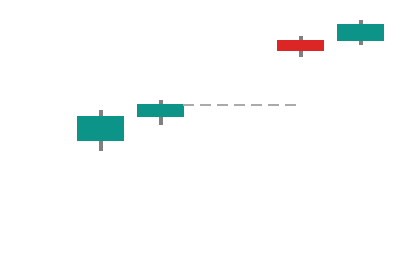
Price closes one session, then opens the next well away from that level, a gap, before continuing.
Overnight, while an exchange sits closed and dark, news and orders keep piling up with nowhere to be executed, so the open is where all of that gets resolved in one burst. That’s why opens so often gap away from the previous close and produce a rush of volatility as the market works out a fair price given everything that happened while it wasn’t looking. It’s also why so many strategies, including the ones covered elsewhere on this site, are built specifically around trading the first hour or so of a session rather than the quiet middle of the day.
The close carries its own risk
Positions held into a close are exposed to whatever happens overnight before the next open, because there’s no way to react to news or manage a trade while the market is shut. That’s part of why day traders often close positions before the session ends rather than holding overnight, and why overnight gaps can be sharp enough to blow through a stop loss that would have held fine during live trading hours.
Forex doesn’t fully escape this either
Even though forex runs almost continuously, it still has a weekly close over the weekend, and the same gap risk applies there on a smaller scale, alongside quieter, thinner conditions around the rollover between the New York close and the Asian session open each day.
Key takeaways
- Exchange-based markets (indices, stocks) keep fixed hours, a leftover from the physical floor era; forex trades nearly continuously instead
- Opens are volatile because overnight news and orders all get resolved into price at once
- Positions held into a close carry overnight gap risk, because there’s no way to react while the market is shut
- Forex still has a weekly close and a daily thin patch around the New York to Asia rollover, even without a full daily close
- A lot of trading strategies are built around the first part of a session specifically because that’s where the real volatility is
Nothing on this page is financial advice. Trade your own account, manage your own risk.
Nothing on this page is financial advice. Trade your own account, manage your own risk.