Pips and Points
Price movement gets measured differently depending on what’s on your chart, and mixing up the units is a quick way to badly misjudge how big a move, or a risk, actually is.
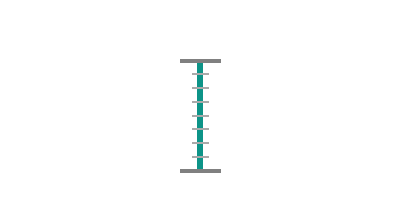
A price move measured in discrete units, whether that’s pips on a forex pair or points on an index.
Pips, for forex
A pip is the standard unit of movement in most forex pairs, and for most pairs it sits at the fourth decimal place, so EURUSD moving from 1.0850 to 1.0860 is a 10 pip move. Yen pairs are the exception: they’re quoted with fewer decimal places, so a pip there is the second decimal, meaning USDJPY moving from 150.00 to 150.10 is also a 10 pip move even though the numbers look nothing alike.
Points, for indices and other instruments
Indices like GER40 and US500 are usually measured in points instead, simply one full unit of the index’s own price, so GER40 moving from 18300 to 18350 is a 50 point move. Points don’t follow the same fixed decimal convention pips do; they’re just whatever unit the specific instrument happens to be quoted in.
Why the actual money value still depends on position size
A pip or a point only tells you how far price moved, not what that move was worth to you, and that depends entirely on how large a position you’re holding. A 10 pip move on a tiny position might be worth a few pence, while the same 10 pip move on a much larger position could be worth hundreds of pounds, which is why position sizing and pip value calculations belong together rather than being treated as separate topics.
Key takeaways
- A pip is the standard forex unit of movement, the fourth decimal place for most pairs, and the second decimal for yen pairs
- A point is the equivalent unit for indices and other instruments, one full unit of that instrument’s own price
- Neither unit tells you the actual money value of a move on its own; that depends on position size
- Always check what unit an instrument is quoted in before assuming a “50 point move” and a “50 pip move” mean anything comparable
Nothing on this page is financial advice. Trade your own account, manage your own risk.
Nothing on this page is financial advice. Trade your own account, manage your own risk.