Stop Loss Placement
A stop placed at a round number of pips protects nothing if that distance sits inside normal price noise. A stop that respects whatever invalidates the trade protects it, even when that turns out wider than a trader would like.
What invalidates the idea
The stop belongs at the point where the reason for being in the trade stops being true, not at a distance that felt comfortable when the order went in. A breakout trade is invalidated if price falls back below the level it just broke; a pullback entry in an uptrend is invalidated below the swing low the pullback bounced from. Structure decides the location. Comfort doesn’t get a vote.
Structure survives the wick a round number doesn’t
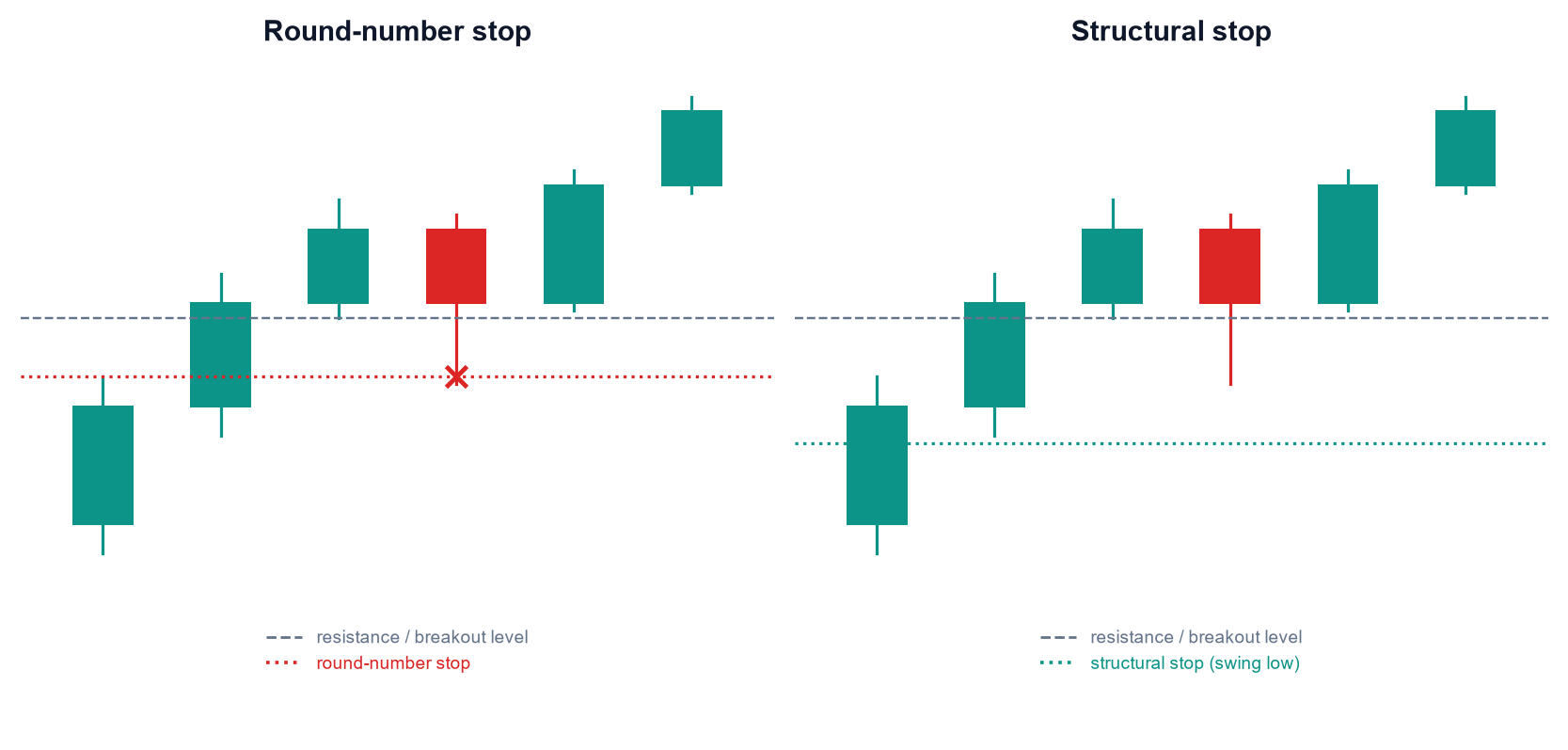
The tight, round-number stop sits inside the retest zone and gets clipped. The structural stop, placed under the swing low that invalidates the idea, survives the same wick.
Example: GER40 breaks and holds above resistance at 18,500. A stop at 18,480, a round 20 points away, sits inside the exact zone that’s likely to get retested and gets clipped on the first pullback. A stop at 18,460, just under the swing low before the breakout, respects the level that invalidates the idea and survives the same retest before the move continues.
A fixed-pip rule trades structure for comfort
A flat “always use a 20-pip stop” rule is easy to apply and ignores that volatility and structure both vary trade to trade. The same 20 pips that’s generous on a quiet, range-bound session can sit well inside normal noise on a fast-moving trending one. Match the stop to what the chart is doing on that particular trade, not a number that worked on a different setup entirely.
Wider isn’t automatically worse
A structurally sound stop that ends up wider than expected isn’t a flaw to fix by dragging it closer to the entry. It’s sized around instead, through Position Sizing. The two decisions work together: find where the idea is wrong first, then size the trade to fit that distance, rather than picking a size and forcing the stop to match it.
Key takeaways
- The stop belongs where the trade idea is proven wrong, not a fixed number of pips away
- Structure, not comfort or habit, decides the distance
- A wider structurally sound stop gets sized around, not moved closer to feel safer
- The same fixed-pip rule can be far too tight on a volatile session and far too loose on a quiet one
Nothing on this page is financial advice. Trade your own account, manage your own risk.
Nothing on this page is financial advice. Trade your own account, manage your own risk.