Discipline and Rules

A trading system only proves itself on the trades you don’t want to take, the ones where every instinct says skip the entry or break the stop, because that’s the moment discipline and simply having rules stop being the same thing. The rule you keep is the one you dislike Anyone can follow a rule that agrees with what they already want to do. The real test of discipline is a rule that says take this trade when it feels wrong, or don’t take this one when it feels obviously right, because in-the-moment feeling and a tested plan disagree with each other more often than most traders expect. A trader who only follows their rules when the rules happen to match their gut hasn’t built discipline, they’ve just been lucky the two lined up so far. ...
3 min · Clear Head Trading

Daily Loss Limits

Most of the damage in a bad trading day doesn’t come from the first loss. It comes from what happens after it, when a trader tries to win the loss back and takes trades they wouldn’t normally take on a calmer day. Why the limit exists A daily loss limit interrupts that pattern. Once losses for the day hit a number decided in advance, trading stops for the day regardless of how good the next setup looks, because the state of mind that follows a string of losses makes “how good it looks” an unreliable judge in the first place. ...

2 min · Clear Head Trading

Revenge Trading

Revenge trading is what happens when a loss stops being information and starts being a debt that needs settling immediately, and it’s one of the most reliable ways to turn a single bad trade into three. How it starts The pattern begins with a loss that feels unfair, a stop hit just before the market reversed, a setup that looked textbook and failed anyway, and instead of accepting it as one of the outcomes the strategy’s own statistics already price in, it gets reframed as an injustice that needs correcting. The next trade isn’t chosen because a real setup appeared, it’s chosen because a loss needs undoing, and those are two completely different reasons to enter a position. ...

3 min · Clear Head Trading

Overtrading

More trades doesn’t mean more opportunity, it usually just means more chances to enter something outside the plan. Overtrading is what happens when trade count creeps up because of restlessness, not because the market is offering more valid setups than usual. It’s not about the number There’s no fixed trade count that separates a disciplined trader from an overtrading one, a scalper working a fast timeframe might take dozens of trades a day as a normal, planned part of their edge, while five trades could be too many for someone whose strategy is built around one or two clean setups a week. The number that matters is whether each entry still meets the same bar the strategy was built on, not how it compares to yesterday’s count or anyone else’s. ...

3 min · Clear Head Trading

When to Stop Trading

Recognising the moment a session has stopped being productive, before it turns into a session that actively costs money, is its own skill, separate from having good rules to trade by in the first place. The rule-based reasons to stop Some stopping points are mechanical and decided in advance: the daily loss limit is hit, a set number of trades for the day has been taken, or a fixed session end time has arrived. None of these need judging in the moment, they’re triggers written into the plan precisely so the decision to stop doesn’t depend on how the trader feels about stopping right then. ...

4 min · Clear Head Trading
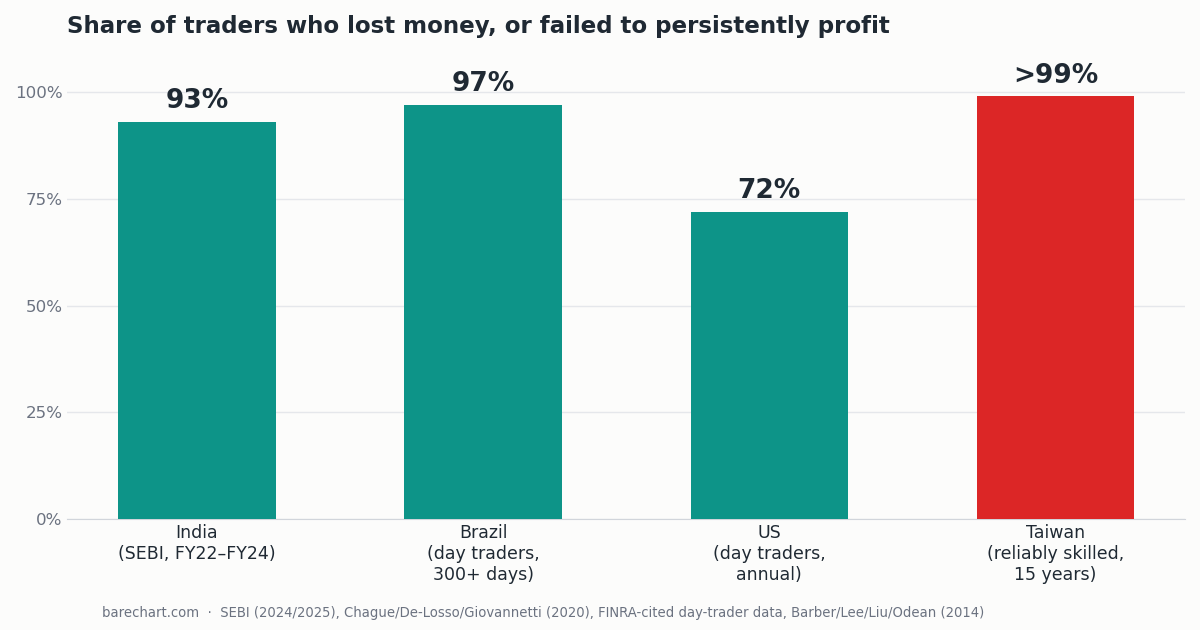
Bar chart showing the share of retail traders who lost money across four studies: SEBI India, Brazil day traders, US households, and Taiwan day traders

Most traders lose money, and the numbers point at psychology, not strategy

Ask most traders why they’re not profitable yet and you’ll hear about strategy: the wrong indicator, a system that needs more backtesting, a market that’s stopped behaving the way it used to. Look at the actual research on who wins and who loses, though, and strategy barely gets a mention. The regulators and academics who’ve measured this properly, across different decades, different countries, and completely different market structures, keep landing on the same answer, and it isn’t a strategy problem. ...

August 26, 2026 · 6 min · Clear Head Trading
Questions, feedback, or work enquiries — get in touch
This site is run by a private trader and reflects personal opinion and research, not financial advice — nothing here is a recommendation to buy, sell, or otherwise trade. Trade your own account and manage your own risk. Data, ratings, and trust scores in the Prop Firms section are compiled from public sources, independent reviews, and our own research — they are not verified guarantees of any firm's terms, financial stability, or conduct, and rules and pricing change frequently, so always confirm current terms directly with a firm before purchasing a challenge. Some links on this site are affiliate links, at no extra cost to you. This site uses cookies for analytics and, via affiliate links, for referral tracking on partner sites — see the Privacy Policy for details.